Projects
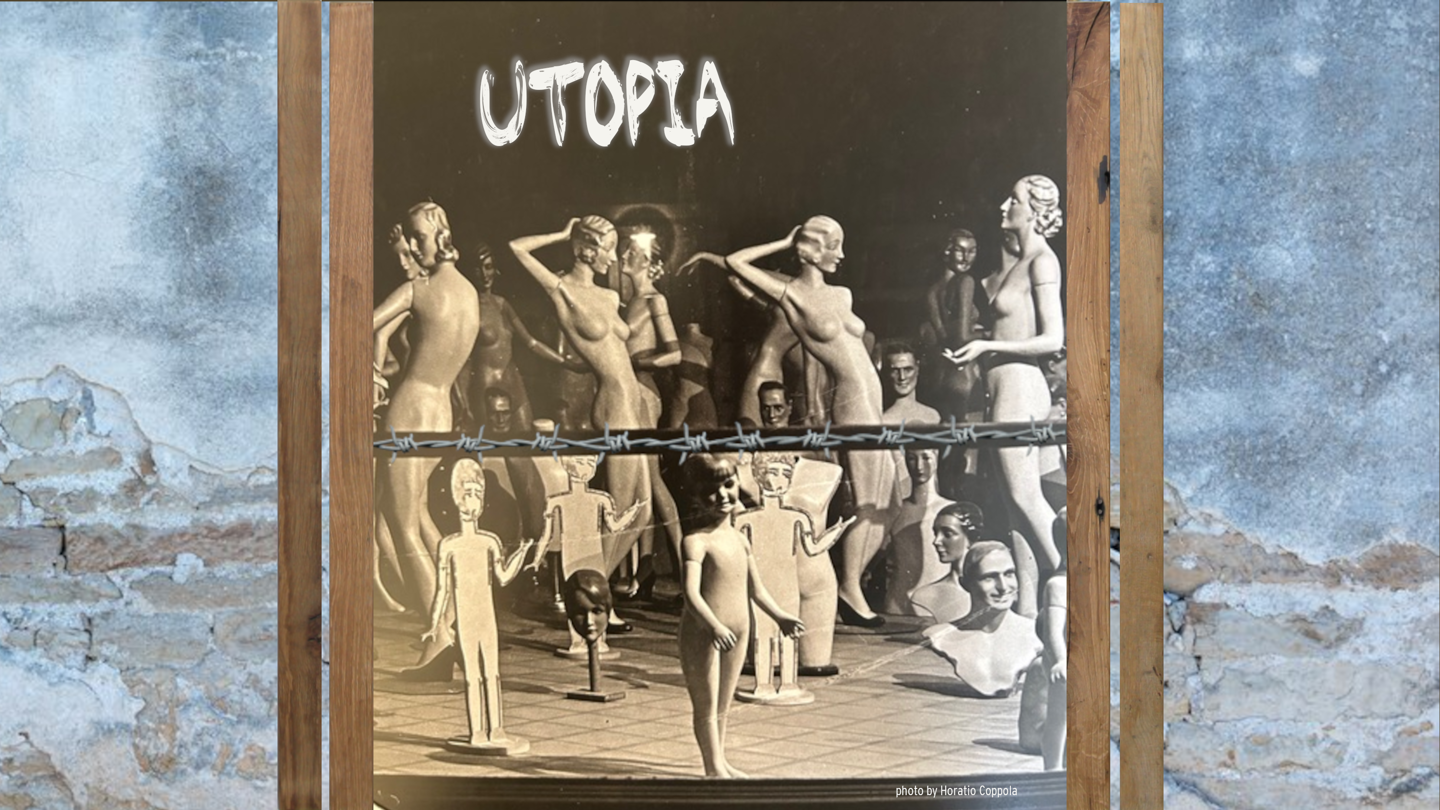
Utopia
Even amid the delian::quartett’s consistently extraordinary body of work, this creation with Ute Lemper deserves a special place.
Utopia, joined by pianist Tobias Deutschmann, is so much more than "just" a fulfilling evening of concert music full of dramatic twists: it is a journey through time, and yet timeless; it is deeply entertaining and utterly heart-wrenching at once; it speaks of the Absolute while remaining profoundly human. A programme for the heart and soul…
Utopia, the new concert project by Ute Lemper and the delian::quartett, is a cathartic journey, a moving portrait of a bygone era. It begins amid the ruins of the First World War and leads through the wild, adventurous years of the Weimar Republic and its Golden Twenties into the darkest nights of the Nazi regime. The journey ends in the ruins of Berlin — yet with a glimpse of a brighter world.
All this is brought to life by Ute Lemper together with the delian::quartett and pianist Tobias Deutschmann, in a riveting performance of songs from those times, specially arranged for the ensemble. Kurt Weill, Hanns Eisler, Friedrich Hollaender and Viktor Ullmann have their say; Yiddish melodies stir the soul as an echo of those lost in the ghettos; Dmitri Shostakovich’s quartet compositions comment on and reflect the unfolding narrative — and in the end, redemption comes in the form of a "children’s anthem".
The interplay of joyful entertainment and loss, of dream and reality, of evil and hope runs through the entire programme, making Utopia an eternally relevant and enduring experience.

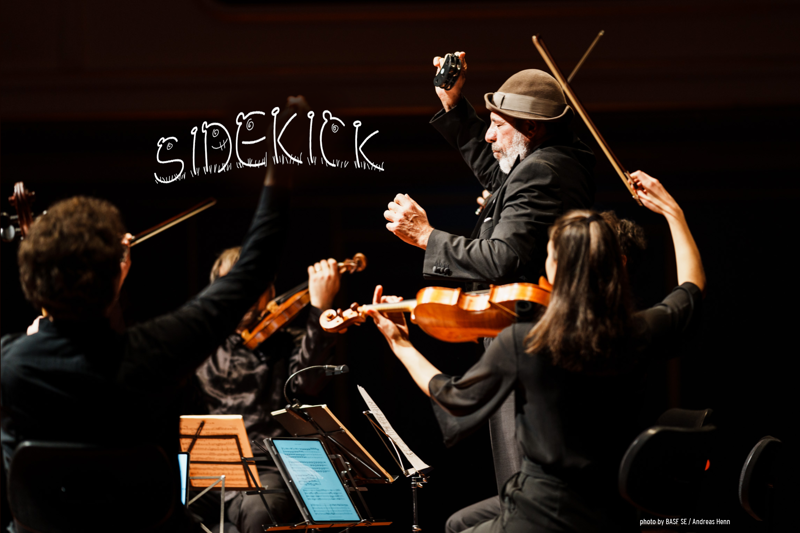
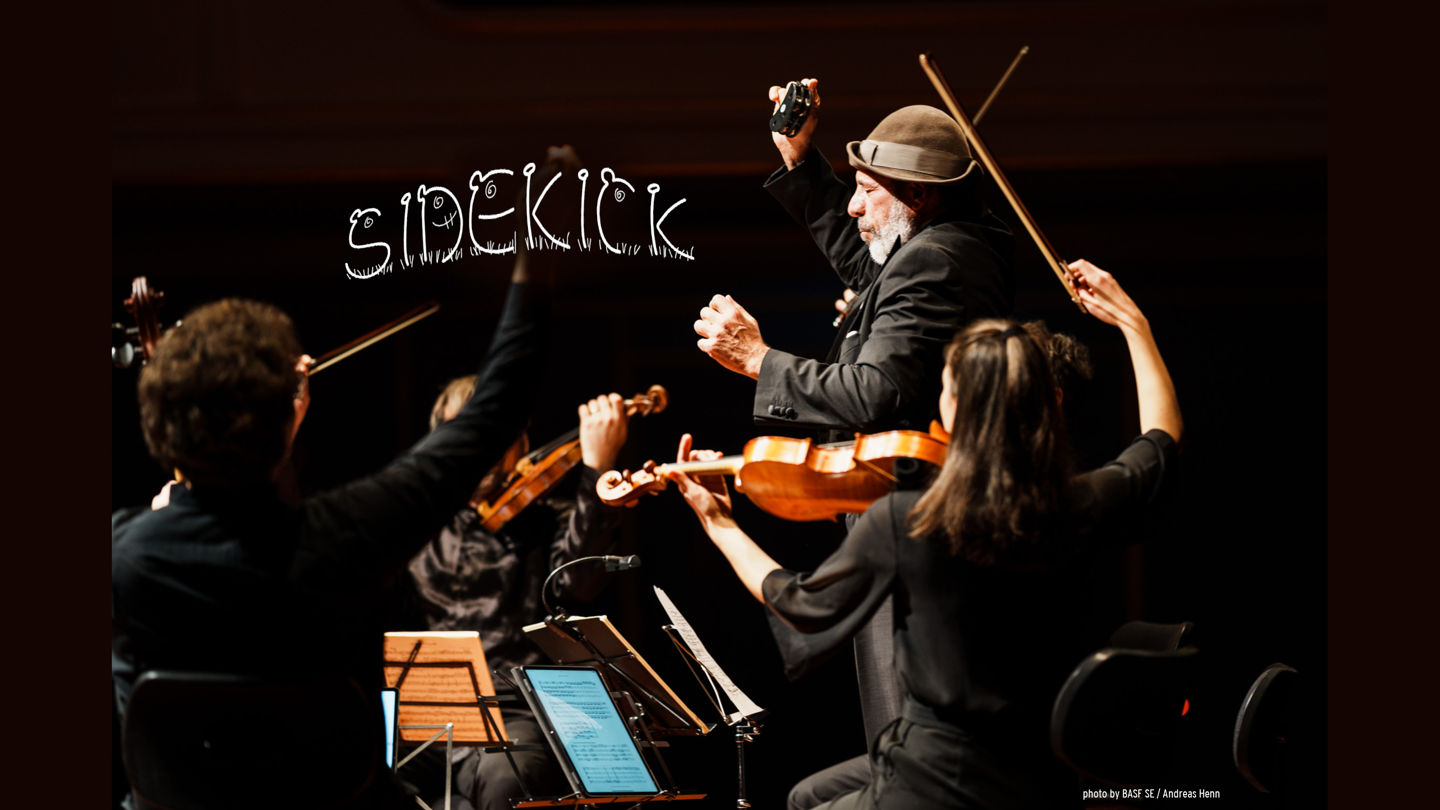
Sidekick
Hello??, you might be thinking. How on earth is that supposed to work: a clown at a string quartet concert. Even if he’s as famous as Peter Shub.
Perhaps you’re curious to find out just how much fun this cheerful, family-friendly, taboo-breaking project by the delian::quartett is? Why Sidekick is a real fountain of youth, always leaving a crowd of boisterous children of all ages in the hall? Why, after a concert, they often receive messages such as: “Thank you for two hours of bliss”?
Well then: step right up, and let the show begin!
A clown at a classical concert…?? And desecrating the hallowed halls – these temples of music – with laughter? Is that even allowed?
Of course, before launching its innovative Sidekick project, the delian::quartett made sure it was on solid ground in this regard. When it met Mozart for coffee in May 2020, it first asked him for his opinion. With a smile, he recommended his own works – and not just his "Musical Joke" K. 522. Haydn, whom the Delians rang a few days later, said he was astonished by the request, given that they had performed his String Quartet Op. 33 No. 2 ("The Joke") so often and always to the same audience reaction. After speaking to various other composers, the ensemble’s violist finally approached Hindemith, who then sent her the score of his "Overture to ‘The Flying Dutchman’, as sight-read by a third-rate spa orchestra at 7 a.m. by the fountain".
To cut a long story short: yes, you may. Music history is evidently rich in laughter in the concert hall, and much of it was even intentional.
The delian::quartett and the great clown Peter Shub have taken this idea to heart. In their interdisciplinary concert project, with genuine affection for one another’s craft, they combine music with comedy and comedy with music in an intelligent and empathetic way. The programme will begin with a string quartet performed in its entirety – a truly respectable opening. Following this virtually trouble-free performance, the audience will not only discover just how much fun classical music is across the ages, but also how varied the sounds of wit and laughter can be.
Sidekick is particularly well-suited to a young concert audience. If we were doctors and pharmacists, we’d recommend it to all children aged 4 to 100. 101 would still work, too.
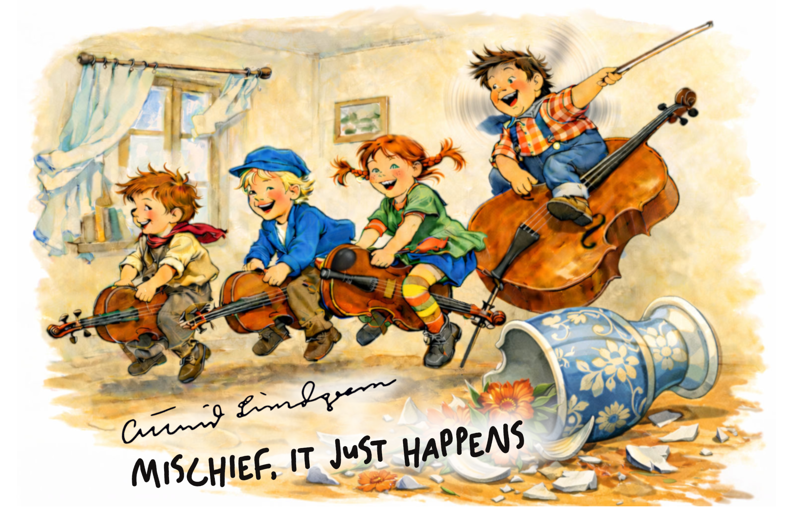
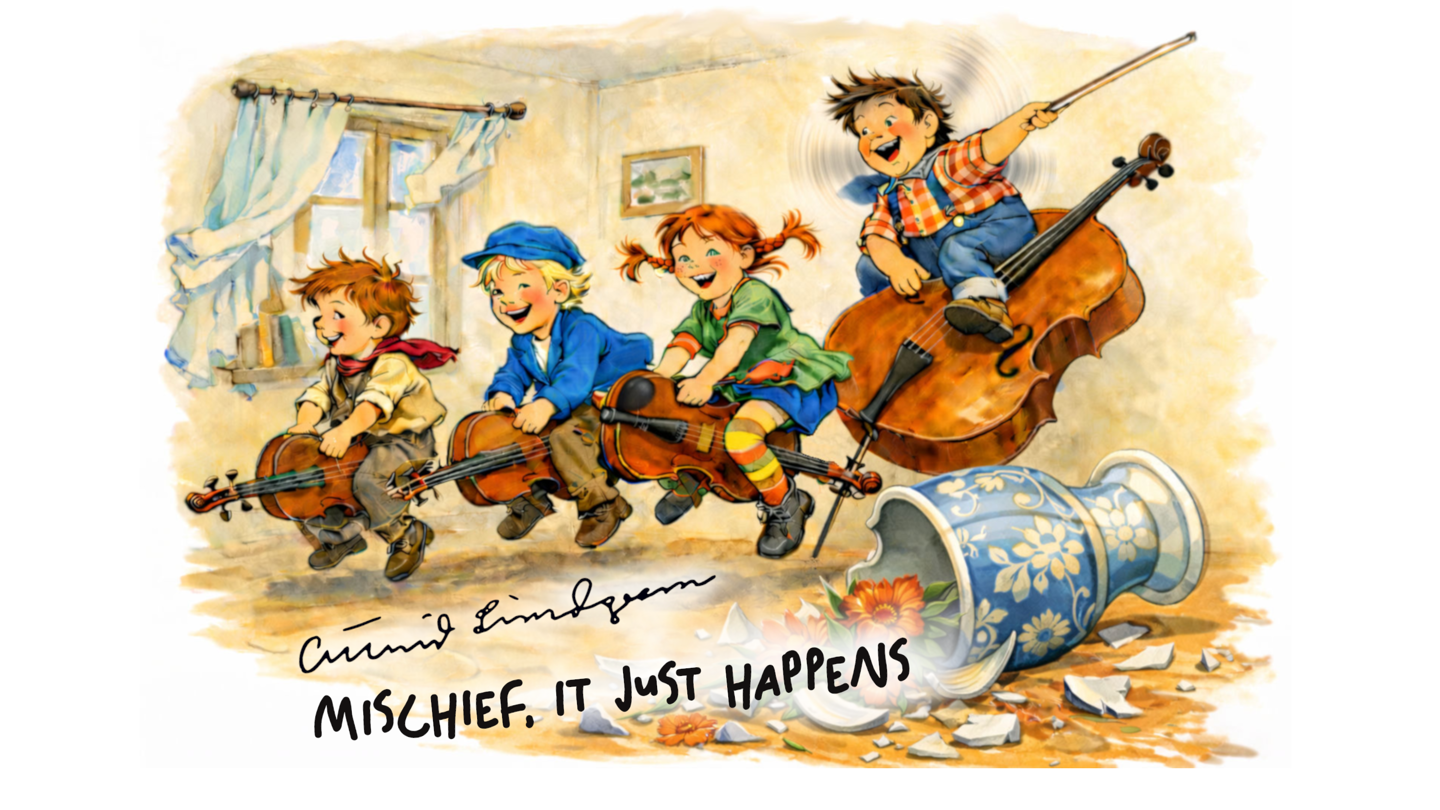
Astrid Lindgren. Mischief, it just happens
A wide-open cultural barn door for everyone: the delian::quartett, together with Ulrich Noethen, dresses Astrid Lindgren’s creations delightfully and to measure in two great string quartets of the Romantic era.
Mischief, it just happens treats visitors not only to a concert experience spanning two colorful hours, but — as Astrid Lindgren herself might put it — to a rose-red day.
With Astrid Lindgren. Mischief, it just happens, the delian::quartett and Ulrich Noethen carry their audience — six- and seven-year-olds just as much as sixty- and seventy-year-olds — home into the world of Pippi Longstocking and Karlsson on the Roof, of Emil from Lönneberga, of Mio, My Son and The Brothers Lionheart, from Noisy Village, from Troublemaker Street and so many more. Fittingly, the music of the program flows from the pens of two child prodigies — the first and the last of the Romantic era: Mendelssohn’s Third String Quartet and Korngold’s Second tell their own stories so suggestively that Astrid Lindgren’s often episodic work slots in seamlessly and with rich nuance, as though the three had written for one another.
Mischief, it just happens is a feel-good program full of wit and wisdom, for which no one could ever be too old or too young. The delian::quartett warmly invites you to a cheeky, wild, wonderful delight…
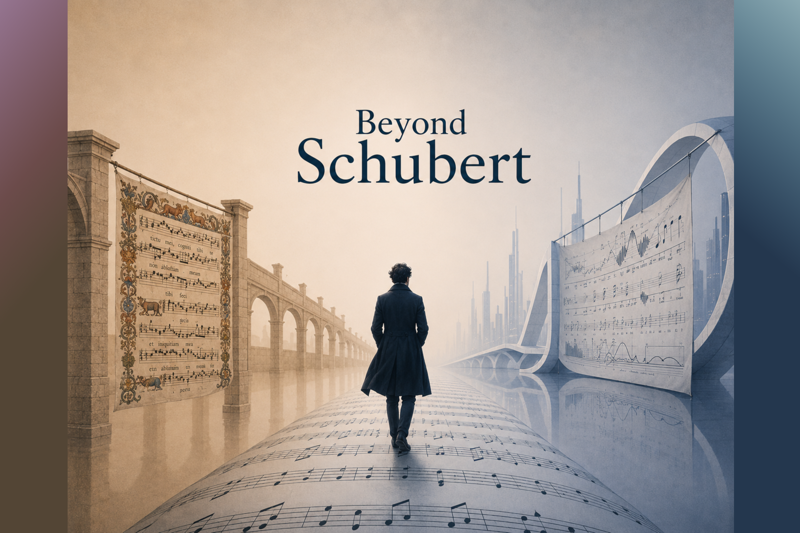
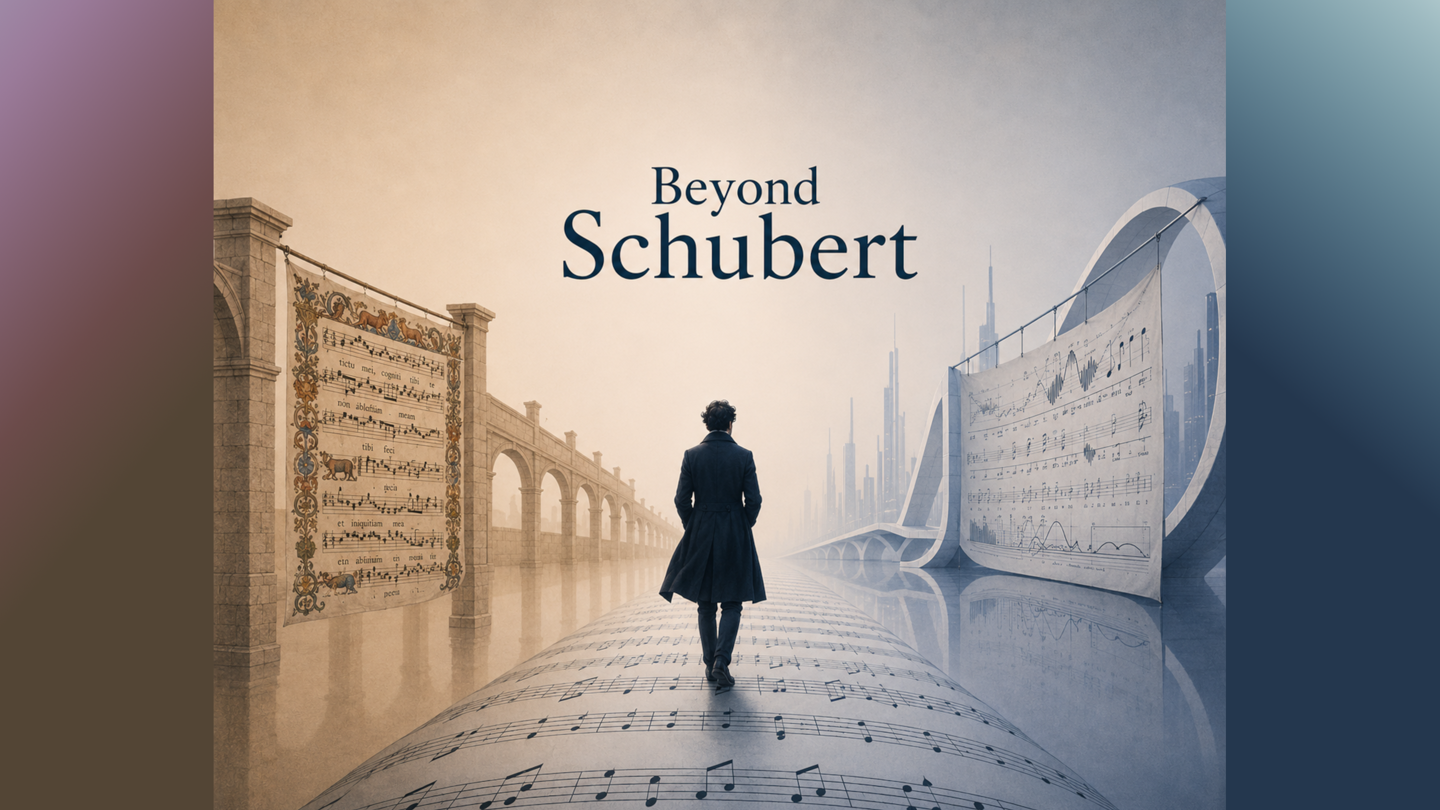
Beyond Schubert
Quite true. The delian::quartett's portrait of Schubert, together with the pianist Alessandro Deljavan, is rooted in tradition. It does not reinvent the wheel. It is not a reckless, boyish stunt.
And yet: it is a genuine Delian project with the quartet's distinctive style. In a very personal way, it sheds new light on Schubert's work. Join us in making time stand still.
Exciting in both form and content, the delian::quartett, together with pianist Alessandro Deljavan, offers a thoughtful and eye-opening insight into the works of Franz Schubert.
The first half of the concert is the ensemble's personal "Schubertiade". In it, they juxtapose one of the rarely performed early string quartets by the brilliant composer with two of his late piano pieces. This echo of an artist's life blends ancient and brand-new music. The result is as overwhelming as it is astonishing: these works, so far removed from one another, sound like siblings in conversation, without the slightest break, as if composers from three centuries had written for one another…
The evening opens with the crowning glory of a bygone era: the final, unfinished Fuga a 3 Soggetti from Bach's "The Art of Fugue". After the introduction of the third theme based on the sequence B-A-C-H, Bach's music comes to a sudden stop, and Schubert's Fourth String Quartet takes over with its sombre-toned introduction – itself a fugue. Only when that opens up and the Allegro con moto of the first movement begins does the listener realise that they have long since left the paths of the Baroque behind.
Schubert's string quartet flows seamlessly into the next piano piece. The effervescent atmosphere of the strings' final Allegro is echoed in Philip Glass's Étude No. 13 for piano, written in a new musical language, before we return organically to Schubert. Schubert's Impromptu, Op. 90 No. 4, brings the first part of the concert to a close with sparkling garlands.
The second half of the concert brings together the protagonists from the first part in one of the greatest piano quintets in the musical repertoire – symphonic dimensions heard up close.
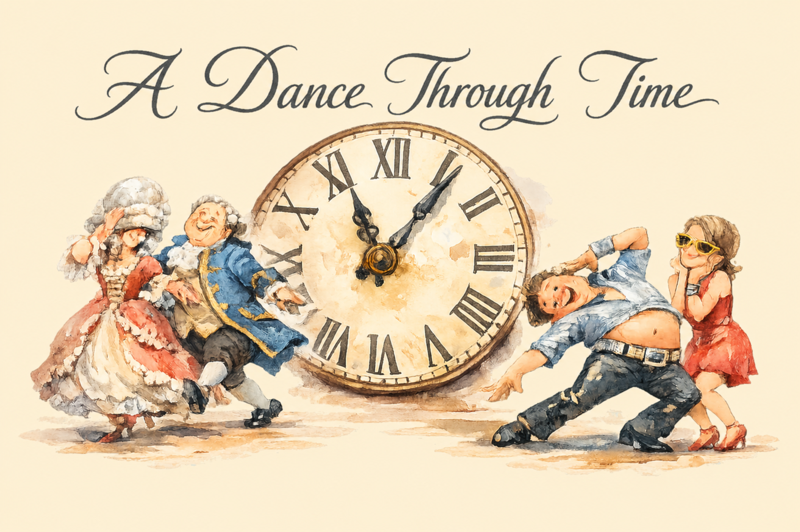
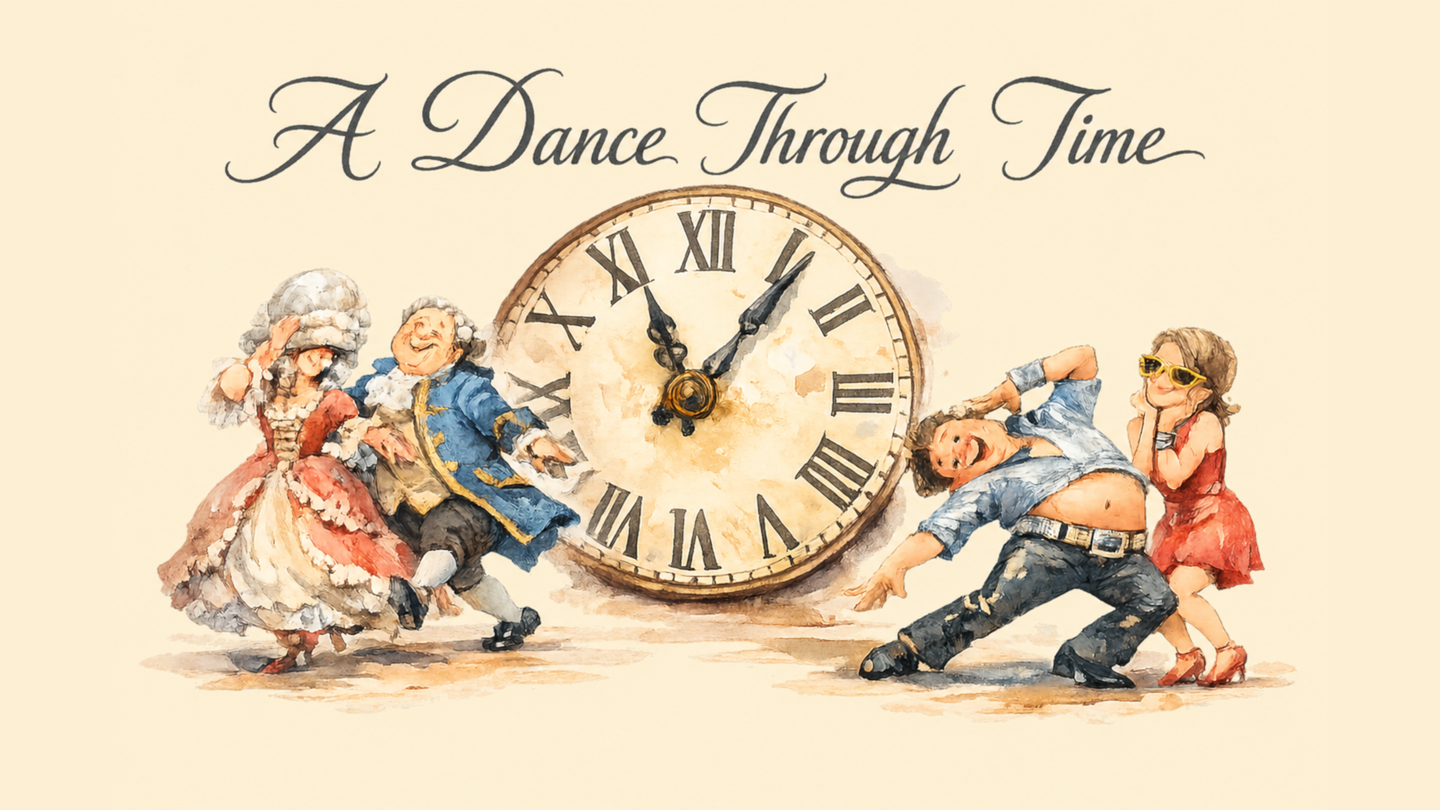
A Dance Through Time
Are you a devotee of refined tedium? Do you relish stiff formality and clothes cut just a size too small? Do you simply want to be left alone — and does an accidental smile always leave you with that odd twitch in the eye? Then you’d best turn the page, quickly.
Everyone else is in for a treat with the delian::quartett’s wonderfully unconventional, thoroughly entertaining hosted format.
After concerts featuring the delian::quartett’s brief spoken interludes — and especially after their children’s concerts — audiences and promoters kept urging the ensemble to create a “fully official” presented programme. With A Dance Through Time, the Delians answer that call.
Their meticulously researched project unfolds in two halves, each with its own personality. The first opens the evening with dance pieces spanning the whole of music history, staged as an amusing, engagingly hosted revue of around fifty minutes. The audience is drawn right into the fun. We recommend not printing the full sequence of dances in the programme — the surprise around every corner is half the pleasure.
This is set against the shorter, seemingly “more serious” second half of the evening. Once again, centuries collapse in an instant — this time spanning the distance from the Renaissance to the twentieth century. Byrd’s "Sing joyfully", a bright, sparkling "overture", is followed, astonishingly seamlessly and strikingly cinematically, by Korngold’s brilliant Second String Quartet. Within it lies an entire world, from wry, knowing wit to Viennese melancholy, and the final movement is — a waltz…
Alternatively, the second half of the concert can be tailored to your preferences through a selection of works, either highlighted or downplayed. Please feel welcome to ask us about it.
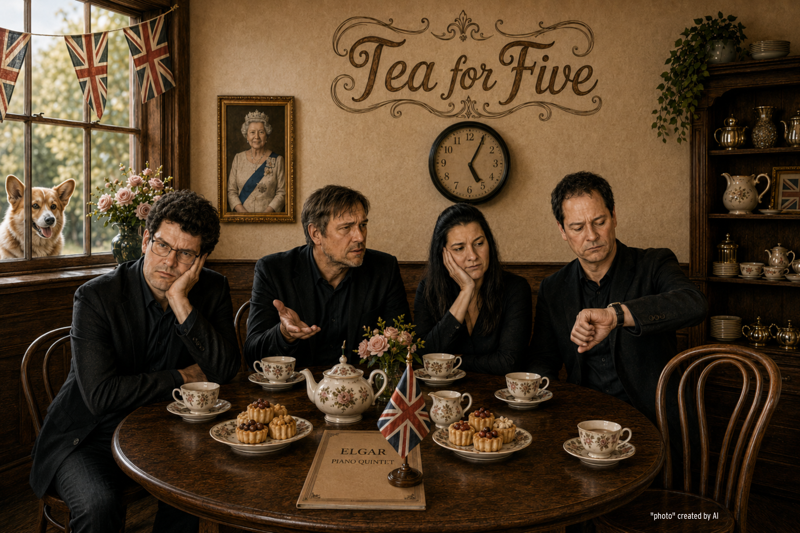
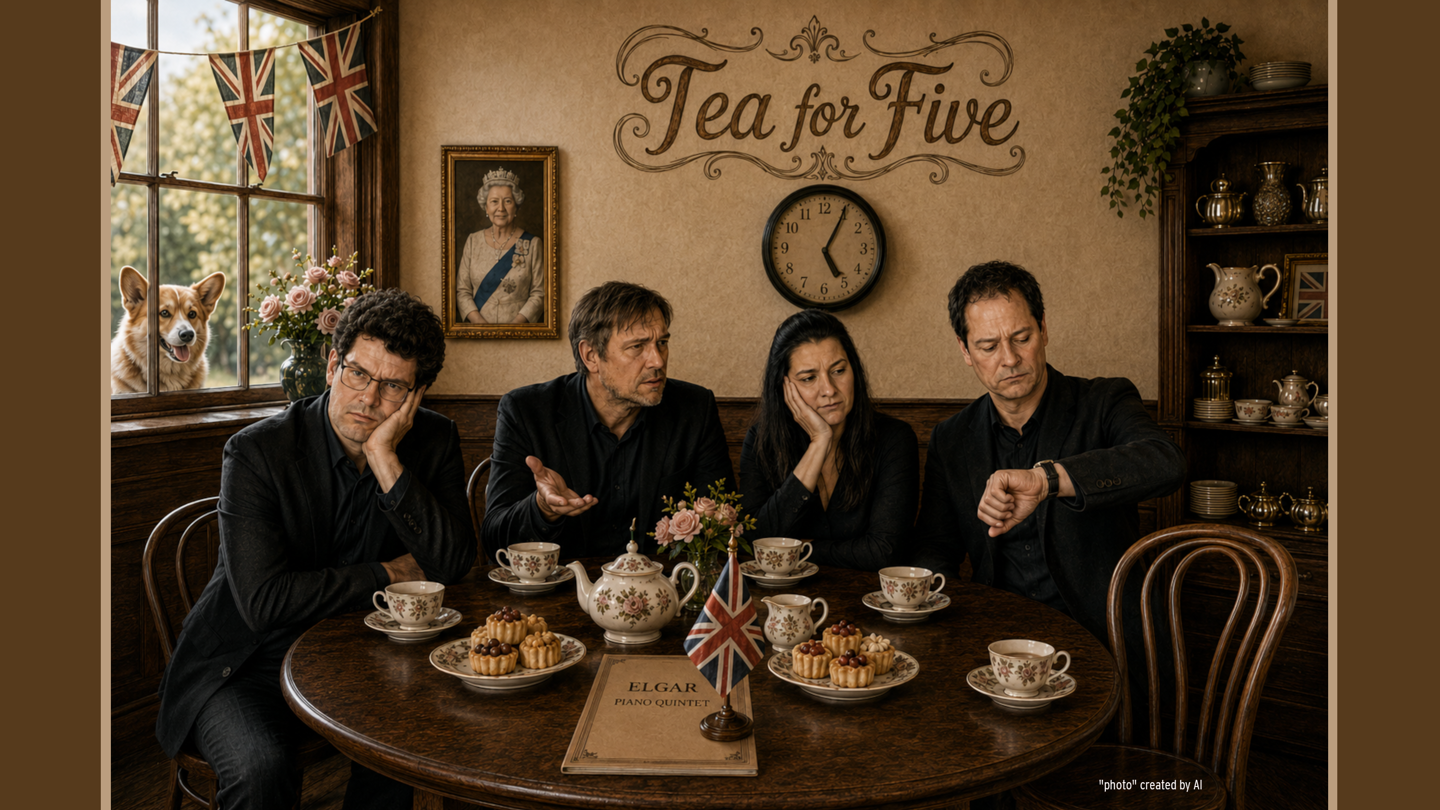
Tea for Five
Forget roast lamb with vinegary mint sauce and warm, flat beer:
With this one-off, the delian::quartett and pianist Enrico Pace whisk you away — with the finest ingredients and a few genuine rarities — on a wonderfully nostalgic journey through the music of the island: very British indeed.
Tea for Five, the quintet format of the delian::quartett together with pianist Enrico Pace, is a true Delian project. Cleverly conceived, it is full of surprises:
The program features famous composers, yet works that are hardly ever performed. It presents three "great Bs" — but by no means Bach, Beethoven, or Brahms. And as you experience it, you’ll find yourself wondering why you’re only discovering these treasures from the island now…
Even the formal conception of this English evening is captivating: in both halves of the concert, all five performers gather together on stage. Like gentlemen, they open the door for one another to each respective main work. The delian::quartett enters the first part with Byrd’s shimmering Renaissance sounds. The string introduction flows without a break, attacca, into Frank Bridges’s piano quintet, written more than three hundred years later. That quintet may well be the find of the evening — full of nostalgia and touching passion.
After the interval, the pianist extends his hand: Britten’s “Sailing” glides by on dreamy melodies. The rhythmic motif from the stormy middle section of the piano piece also shapes the opening of Elgar’s Piano Quintet. Of this rare, late-Romantic-sounding chamber work by the composer, George Bernard Shaw wrote that it was "the finest thing of its kind since Coriolan". In any case, it promises to be an exhilarating concert experience.
And for those who wish, Tea for Five ends with a specially tailored encore, served with a wink.
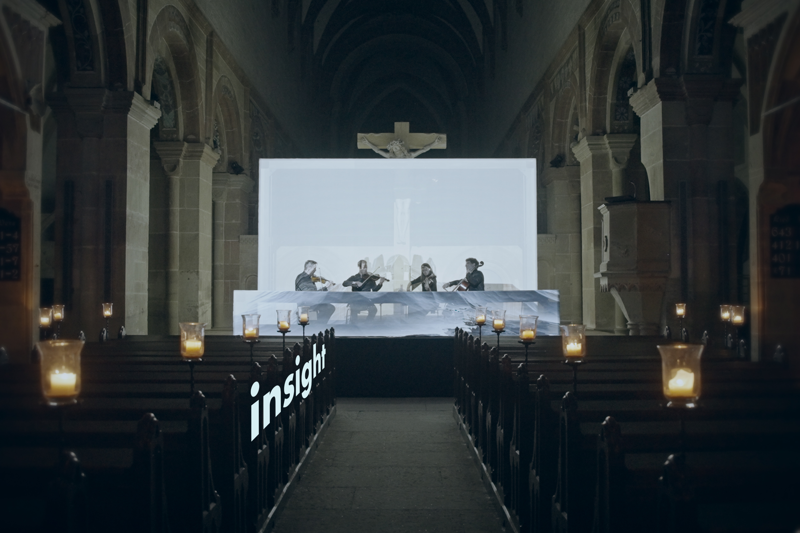
insight
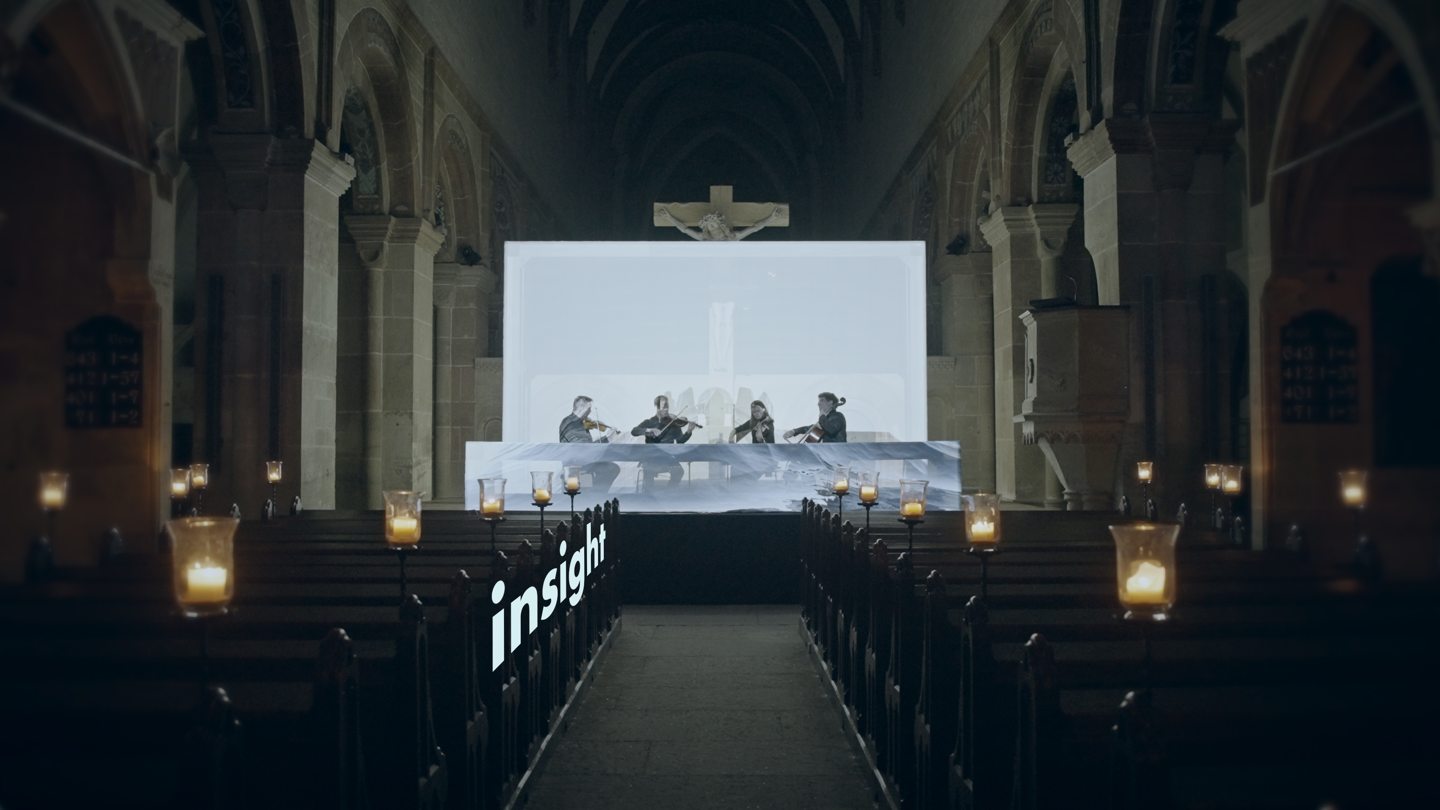
Can you see music? You can, in the delian::quartett’s spectacular multimedia Bach project in collaboration with video artist Marc Molinos of PiedraMudaLAB.
Step into surreal worlds. Experience and recognize the rich music of Bach’s "The Art of Fugue" in a completely novel way, in images – in real time and grounded in scholarly research. A breathtaking, visionary format with no equal in the international concert world.
Bach in a new form of experience and understanding: music for the eye.
Johann Sebastian Bach’s "The Art of Fugue" is regarded as the enigmatic summit of an entire era. A glance at the score immediately reveals the greatness and architectural perfection that pervade the pre-sonic image of the notation. At the same time, Bach’s artfully constructed music offers the listener sensuous sounds of the deepest expressive power. The delian::quartett and video artist Marc Molinos of PiedraMudaLAB combine these two ideas in a creative and innovative way in their video-art project insight: in overwhelming images, they render the structures of the four-voice Contrapuncti in Bach’s “The Art of Fugue” visible in real time. After two years of intensive research and preparatory work, this ancient music merges with digital space.
The musical-theoretical foundation of insight is the comprehensive analysis of Bach’s opus summum by musicologist and composer Andrea Damiano Cotti. All elements of the video installation — their appearances, transformations, and choreographies — are inspired by this procedure. Put simply, the shape of the installation’s “protagonists” is based on computed graphical algorithms of the thematic variations; the numerical analysis of each individual Contrapunctus determines the “plot” of the video sequences.
In the end, Bach’s polyphonic music finds its echo in surreal, artistically interpretive visual worlds — an intoxicating, immersive experience. So that “The Art of Fugue” can be experienced inseparably in sound and image, a total work of art takes shape on stage: the delian::quartett’s live performance is integrated into the video projection by means of two custom-made screens.
"At some point, almost suddenly, ears and eyes recognize the connection between the musical themes and the movements of these playful dots, the waves, the streaks, lines, ornaments, or architectures. It's a goosebump moment when you sensuously understand that the old music and the new digital spaces are dancing together…"
Deutschlandfunk Musikjournal
At the start of a concert, we recommend an entertaining introduction to the world of insight given by the artists themselves.
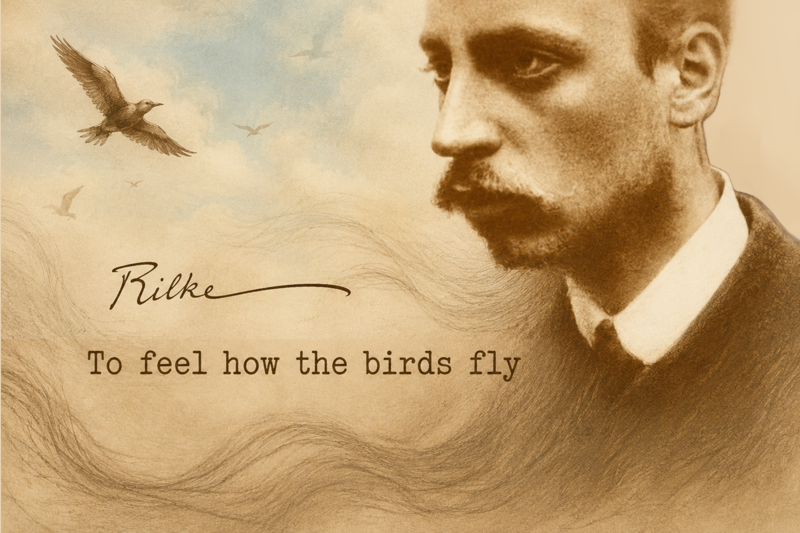
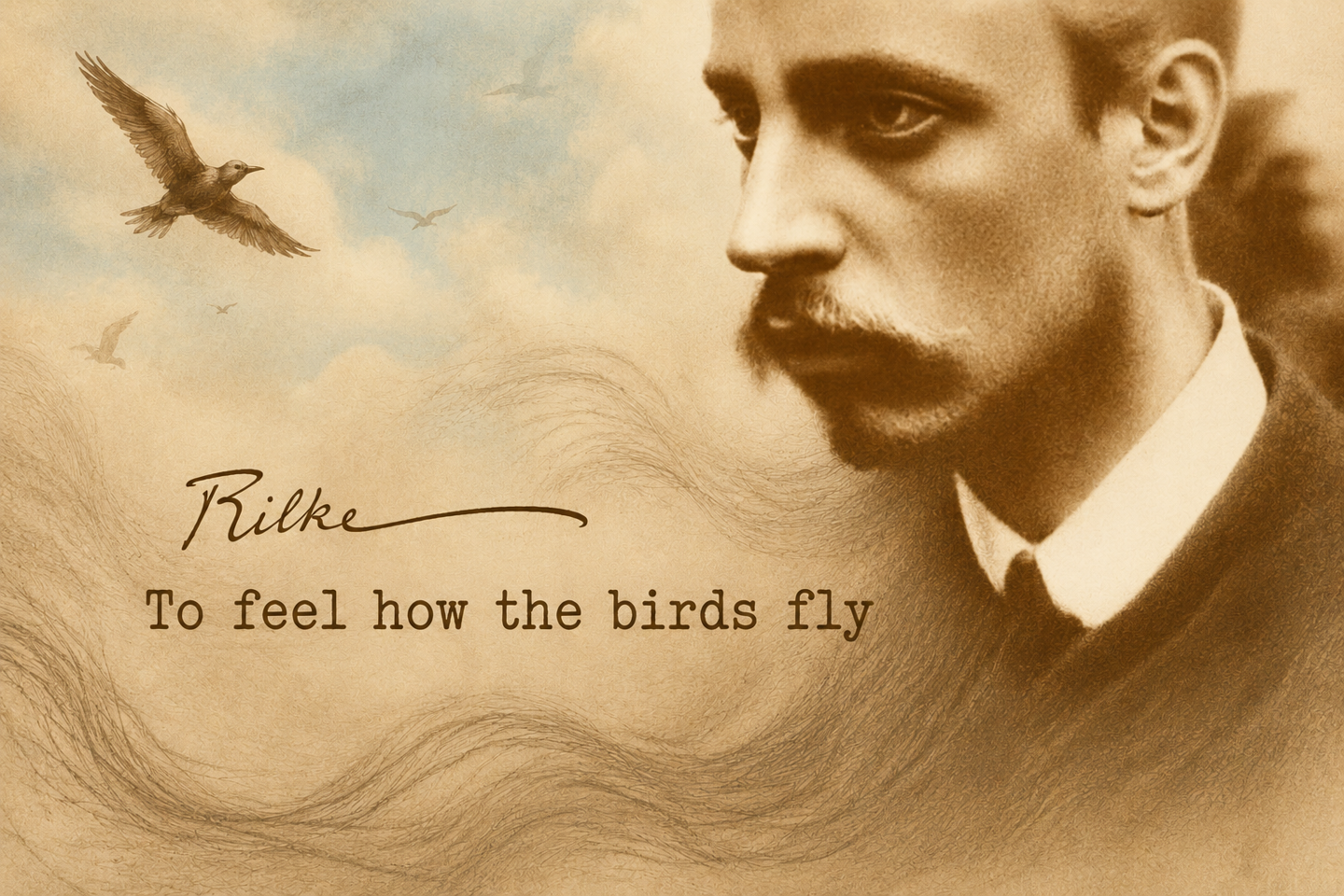
Rilke. To feel how the birds fly
What an undertaking: Rainer Maria Rilke’s only novel serves as the backdrop for a literary concert format of poignant beauty and poetic truth…
A dramaturgical highlight that stands on its own – let yourself be beguiled by the delian::quartett alongside Iffland Ring recipient Jens Harzer.
Rilke. To feel how the birds fly is inspired by Rainer Maria Rilke’s "The Notebooks of Malte Laurids Brigge". In it, the great poet captures in poetic, deeply felt language what concerns each and every one of us: the search for happiness and meaning, and the reckoning with fate and destiny, fear and redemption, loneliness and solace, with death and God, despair, forgiveness, and love. With life itself.
Thanks to the episodic diary form of Rilke’s "prose book", the delian::quartett was able, in this project too, to take the music as its conceptual starting point: the individual texts fit into the landscapes that the format's musical works unfold. This gives the word-mosaic a dramaturgical cohesion and a distinctive character all its own.
What unfolds in the first part of the concert is shaped by Shostakovich’s darkly torn Seventh String Quartet, dedicated to the memory of his deceased first wife. Barber’s famous Adagio — one of the most moving works in music history — grants it a quiet ending. And in the second half, Beethoven’s furious Op. 95 serves as a powerful catalyst for Rilke’s inner worlds.

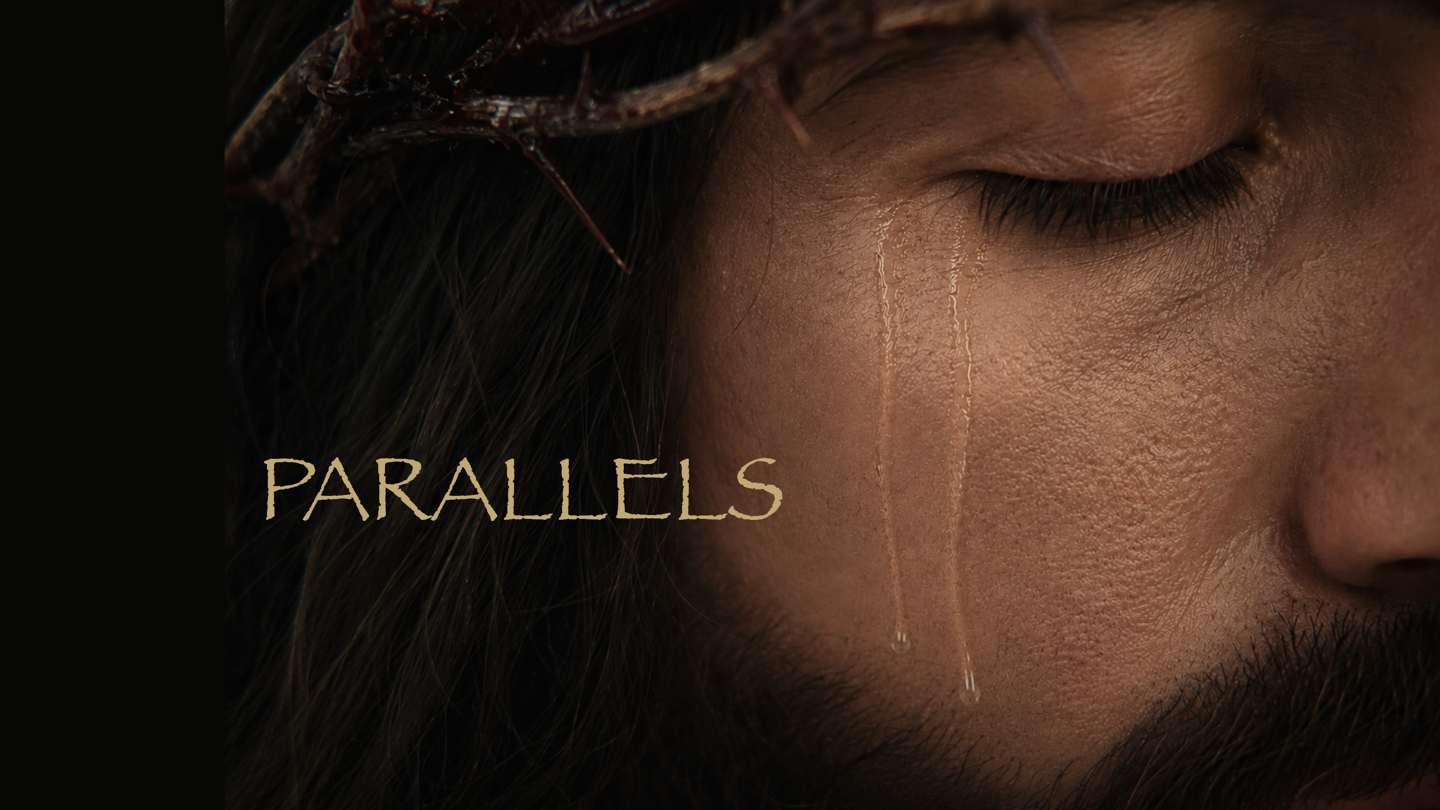
Parallels
Classical meets jazz: with the delian::quartett teaming up with jazz pianist Julia Hülsmann, this is by no means a harmless crossover blend.
Parallels is a moving and deeply human journey around that singular work by Joseph Haydn which he himself considered one of his best. The idea behind the project innovatively continues a centuries-old tradition that Haydn established at the time with the world premiere of his composition…
In this richly connected concert format by the delian::quartett together with jazz pianist Julia Hülsmann, classical music and jazz join hands. The audience experiences a dialogue between two worlds in their purest form. Unexpectedly seamlessly, the two merge into one another — an extraordinary experience for the listener…
The starting point for the concept is Haydn’s “The Seven Last Words of Our Saviour on the Cross”. According to tradition, this benchmark-setting work was premiered with spoken reflections on each of the seven biblical words preceding the corresponding music. And even today, “The Seven Last Words” is still often accompanied by meditative readings between the musical movements.
What if the delian::quartett dispensed with spoken word altogether? What if it reversed the traditional order and let new, young music meditate on Haydn’s wordlessly moving musical rhetoric instead? The idea of bringing the past into dialogue with the one, personal moment of the concert was immediately fascinating.
The richly colored reflections of the jazz piano on “The Seven Last Words” underscore the delian::quartett’s personal interpretive approach, one that releases this great, ancient composition from its ecclesiastical Passion context. Haydn’s music, often presented as all too lofty and sacred, gains in emotional depth and becomes human — does it not speak of things that all of us find in our own lives: fear and forgiveness, pain, abandonment and redemption, love and death, and the hope of paradise?
Parallels is unique, illuminating, moving. We recommend it as a memorable experience lasting 85 to 90 minutes without intermission.
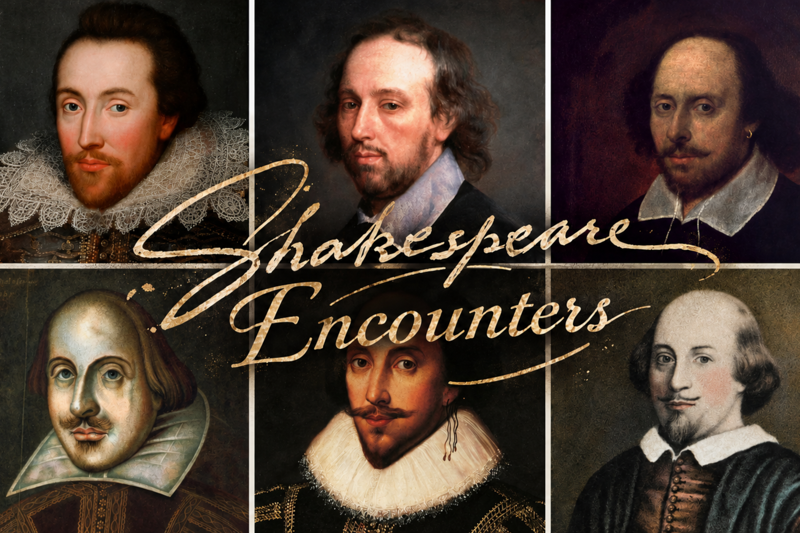
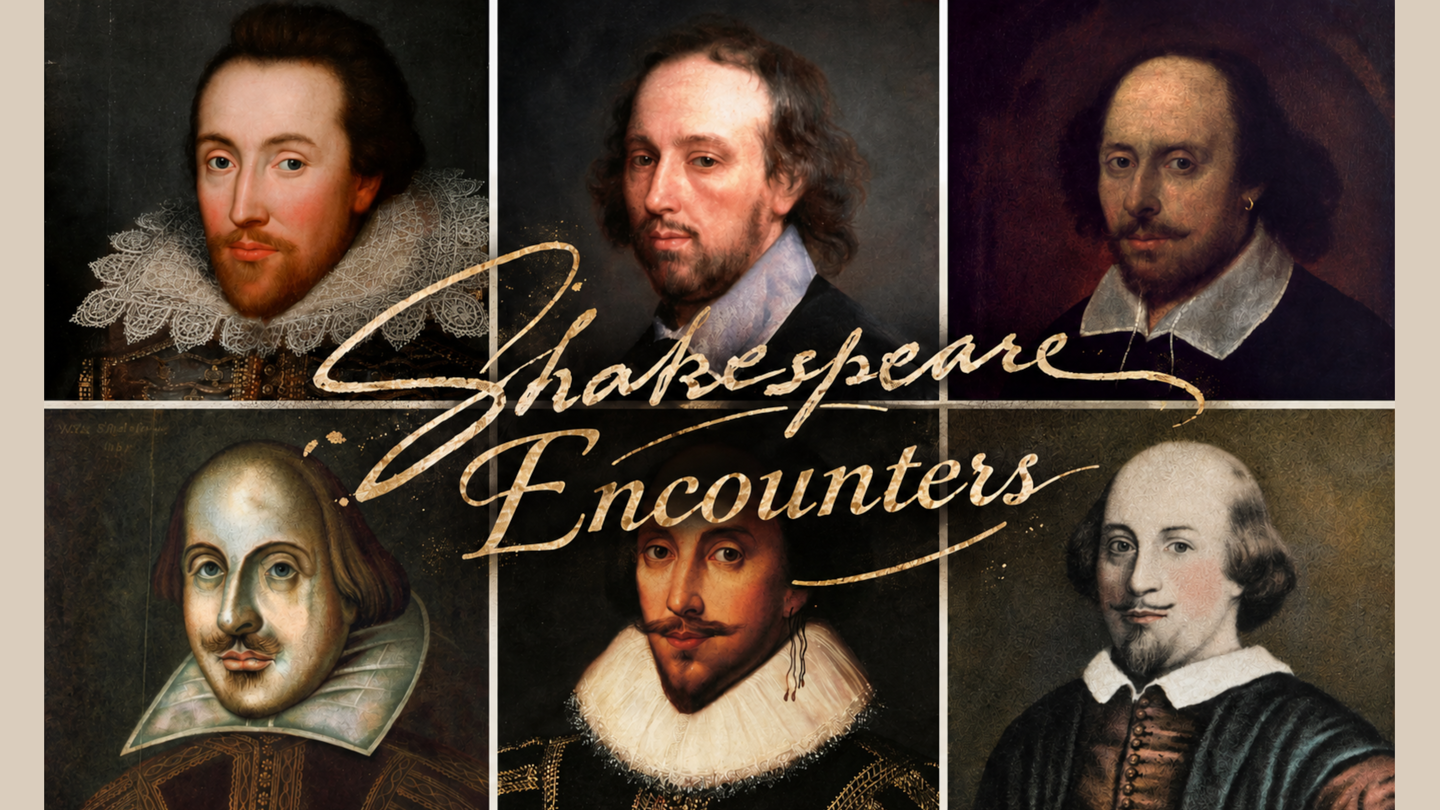
Shakespeare. Encounters
Regularly met with ovations: in a remarkable way, this Delian highlight unites tradition and innovation.
Alongside the great Angela Winkler, the delian::quartett presents the best from the worlds of word and music: sounding poetry in an audience-friendly format for everyone.
With Shakespeare. Encounters, conceived as a commissioned project for the Shakespeare Festival 2023, the delian::quartett breaks new ground: for the first time, it began the conceptual work on a literary venture starting from the music. In this way it gave its journey through the universe of the brilliant Elizabethan poet William Shakespeare a dramaturgical cohesion despite the diverse literary sources.
Two great string quartets of almost pictorial affect guide the way through this extraordinary format and provide an impressive stage for Shakespeare’s art. Dmitri Shostakovich’s Eighth String Quartet — so distant in time — blends surprisingly harmoniously into the texts. And even Felix Mendelssohn Bartholdy unfolds an unexpected impact in the delian::quartett’s interpretation. His revolutionary Sixth String Quartet leaves any Midsummer Night’s Dream far behind. Fateful and deeply emotional, it was the composer’s last completed work, created under the impression of the death of his beloved sister Fanny.
In search of atmospheric affinities with these musical worlds, the ensemble combed through Shakespeare’s complete works. Through an elaborate dramaturgy, protagonists from seven major Shakespeare plays have their say: Macbeth, Lear, King Richard III, Hamlet, The Tempest, Twelfth Night and As You Like It. The Delians also discovered some of Shakespeare’s enchanting sonnets for their project.
The audience experiences reflections on humanity, love, and life of timeless poetic power, embedded in sound. The word merges into the music as though the two had found each other across the centuries. In Shakespeare. Encounters, it is not only the heroines and heroes of famous plays who meet, but so much more: word and music, tradition and innovation, drama and magic, and truth and dream…
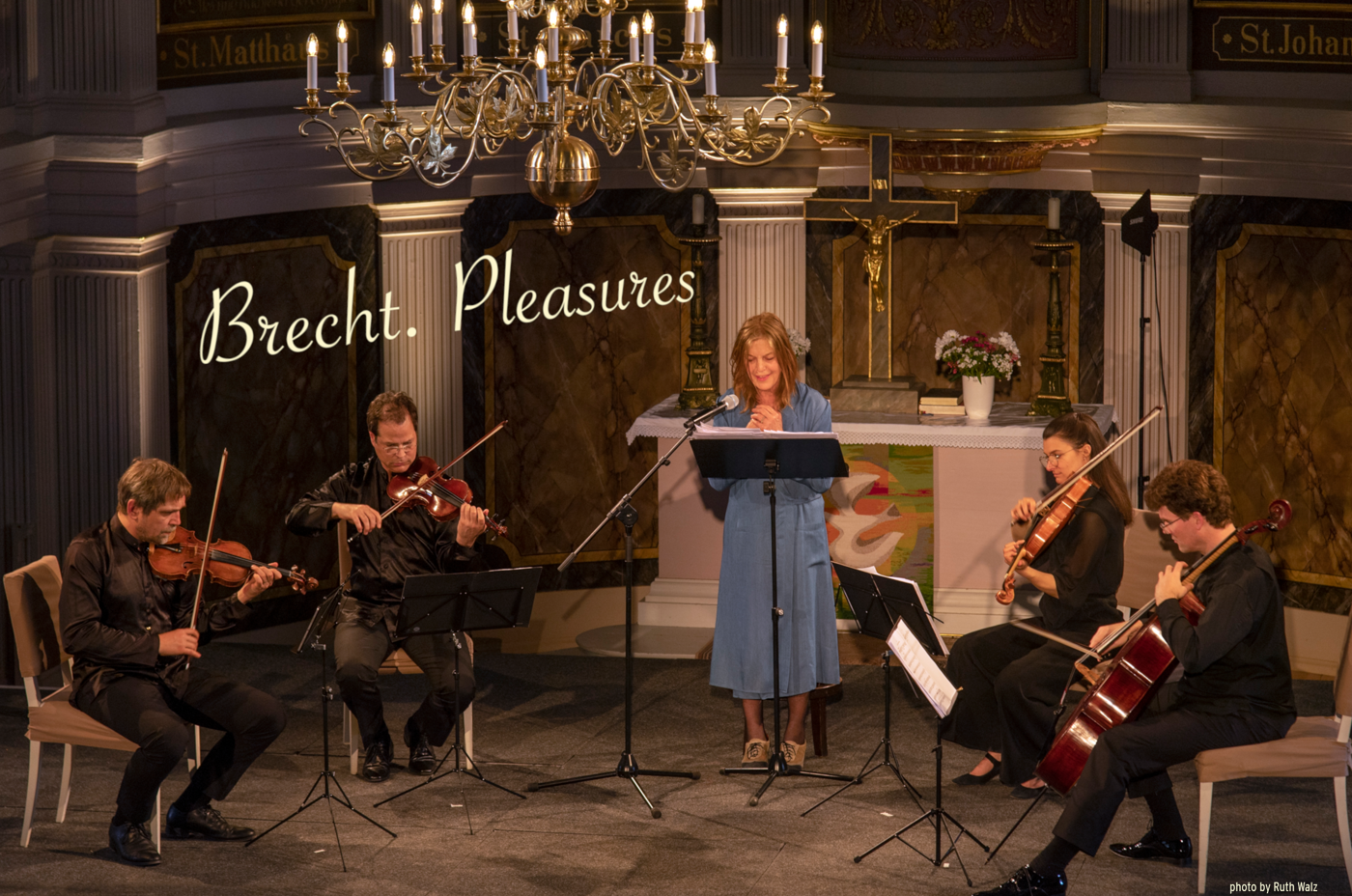
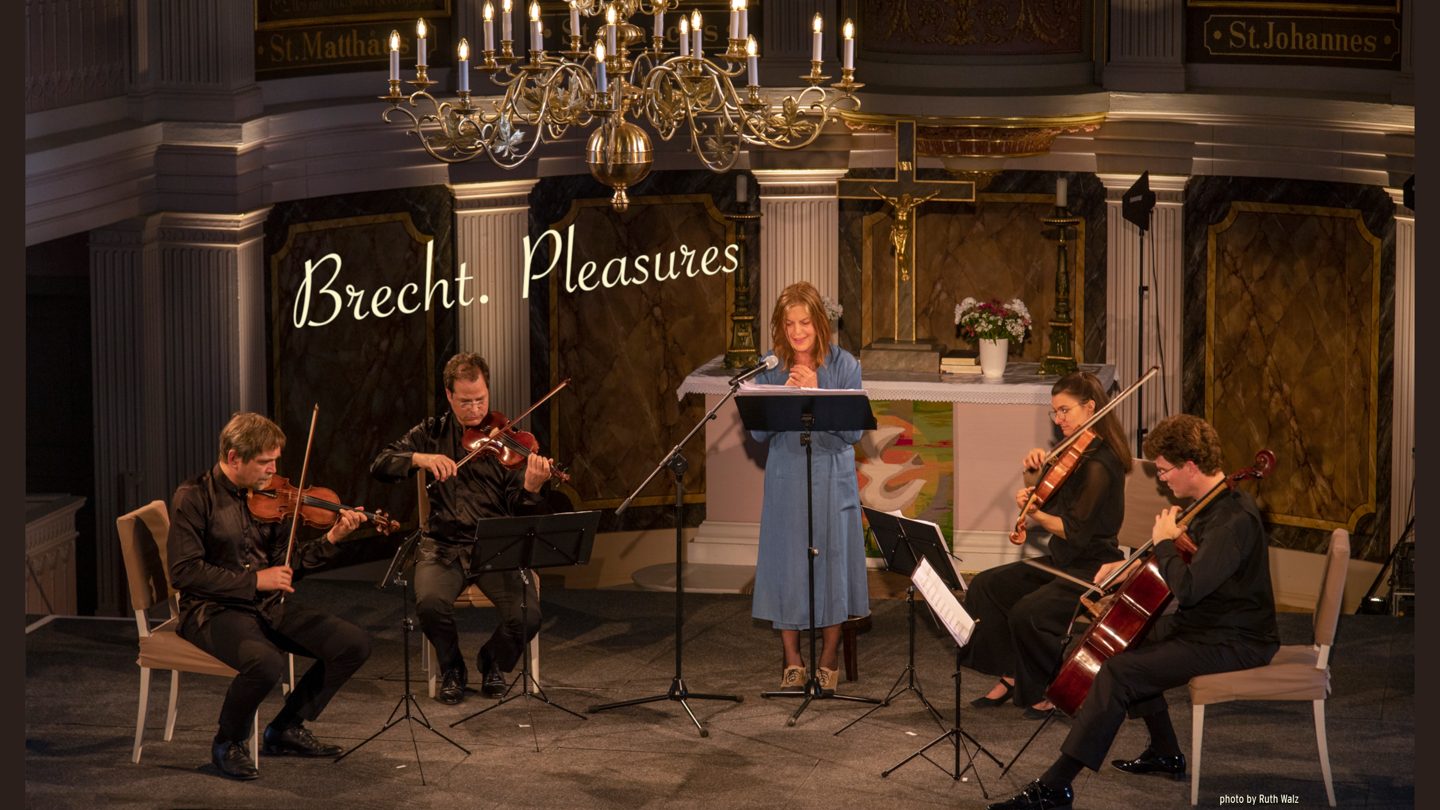
Brecht. Pleasures
How tender can Bertolt Brecht sound here – and there: how sharp is his blade? A many-faceted project by the delian::quartett explores this range.
The format presents film and theatre legend Angela Winkler not only as an actress and charismatic reciter. In the second part of the concert you will experience her performing chansons set to Brecht’s texts, with a vocal artistry rooted entirely in the tradition of Lotte Lenya. The word governs the heart of these songs, movingly relevant even today.
Handpicked texts by Brecht run through the entire program, dramaturgically linking the musical sections together like a red thread.
In the first part, they stand in counterpoint to Shostakovich’s highly emotional Fourth String Quartet. It was composed in 1948 under the shadow of Stalin-era antisemitism and the accusation leveled against the composer of “formalist perversions and anti-democratic tendencies”. This confrontation is followed by an interweaving of Bertolt Brecht’s words with songs by Weill, Eisler, and Bruinier. All of the song lyrics likewise come from Brecht’s pen, while the music was specially arranged for the delian::quartett.
Soulful, sensitive dialogues emerge between light and darkness, wit and bitterness, disillusionment and tenderness.